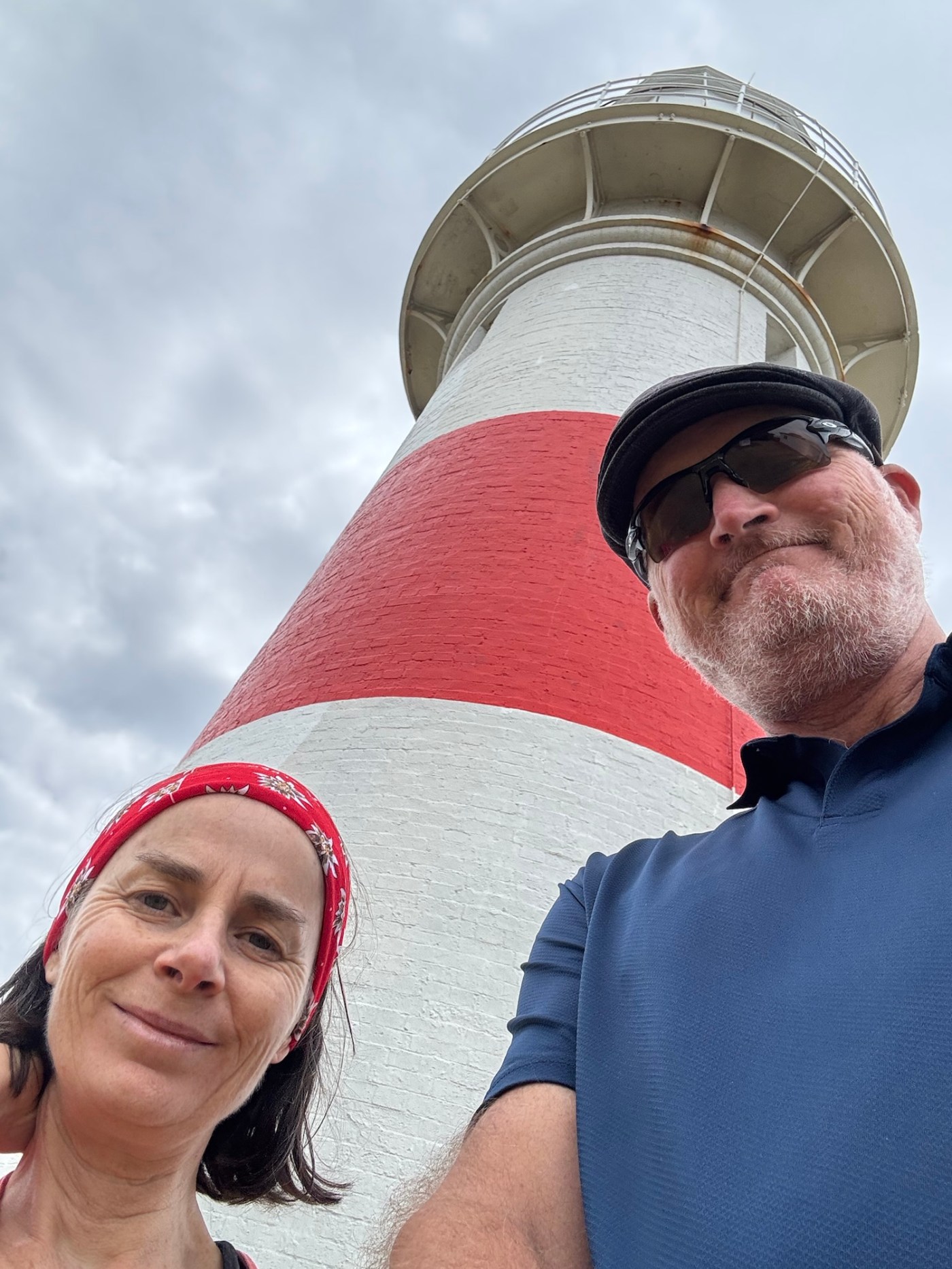
January 25, 2025
Another long weekend beckoned and we considered where we might be able to head for a getaway that wasn’t too far away and would allow us to see a bit more of our Tassie patch.
“We could go to George Town,” suggested Steve.
“Pfffft,” I huffed with a roll of the eyes, “what is there in George Town?”
How rude of I to judge! All I really knew of George Town was a short trip there and back to the school when I had to present a workshop to staff and that was many years ago, so since I really hadn’t seen the place, what was I basing my haughty huffing on? Some brief research and I discovered it is in fact the third oldest European settlement in Australia after Sydney and Hobart and on its doorstep is Low Head which apparently has an interesting lighthouse and museum with some of its own stories to tell.
“All right,” I said with contrition, “let’s have a look at George Town.”
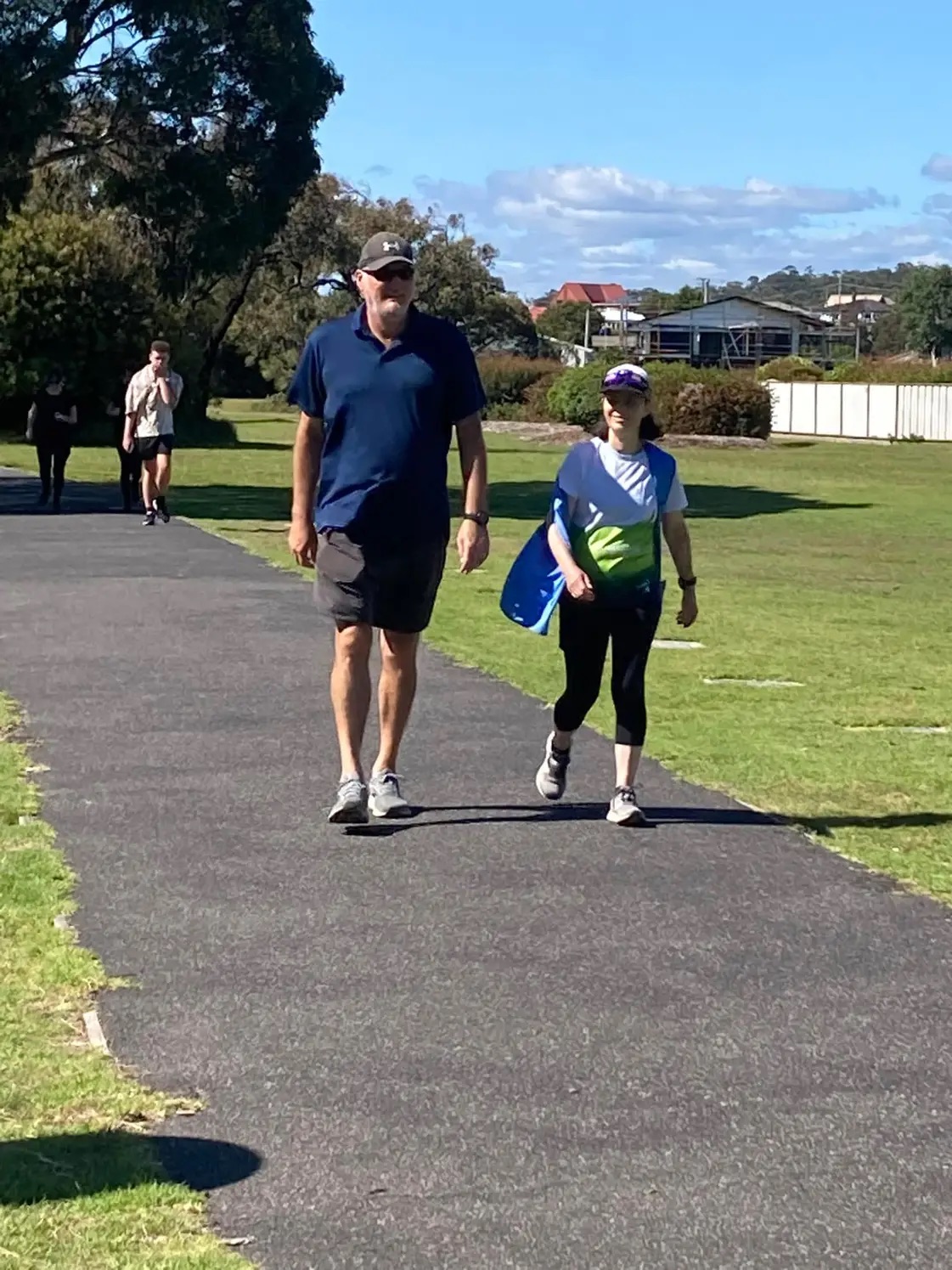
Saturday started, as always with our local Parkrun. Couldn’t set off further afield without first getting in our Parkrun, which is, at the moment, still a Parkwalk, but a nice walk it was and at least while I’m only walking, Steve will join me in the Parkrun family. Done.
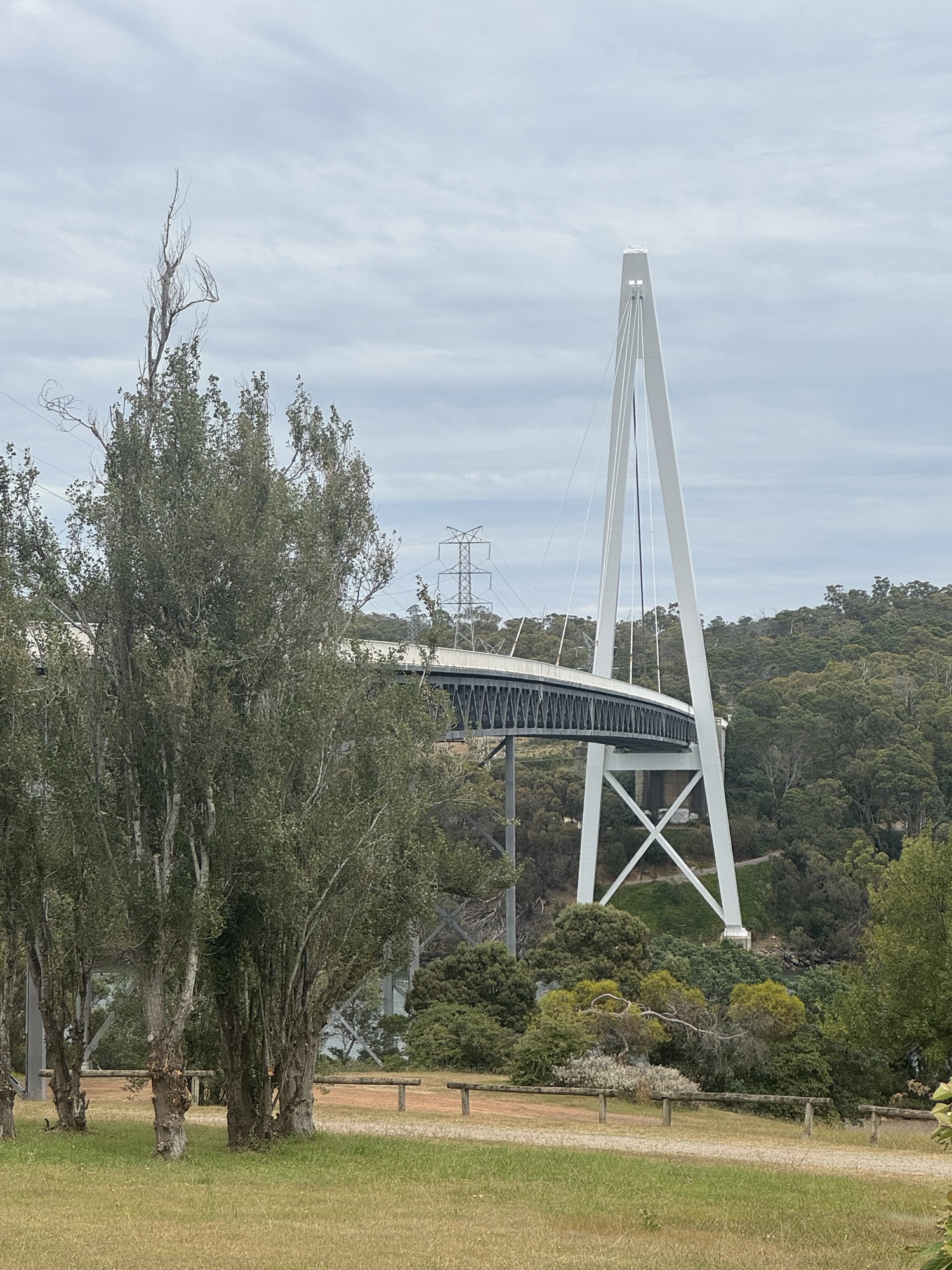
We set off, motoring towards George Town, stopping at the Batman Bridge for a snack before heading on. Rolling into George Town, it sits in something of a time warp. Houses very 60’s and 70’s and the modern gentrification of McMansions and various shades of rendered abodes has not yet descended on this place. A few minutes further on and we motored into Low Head, with a similar vibe, albeit a little more beachy, a little more shacky and a few more holiday makers.
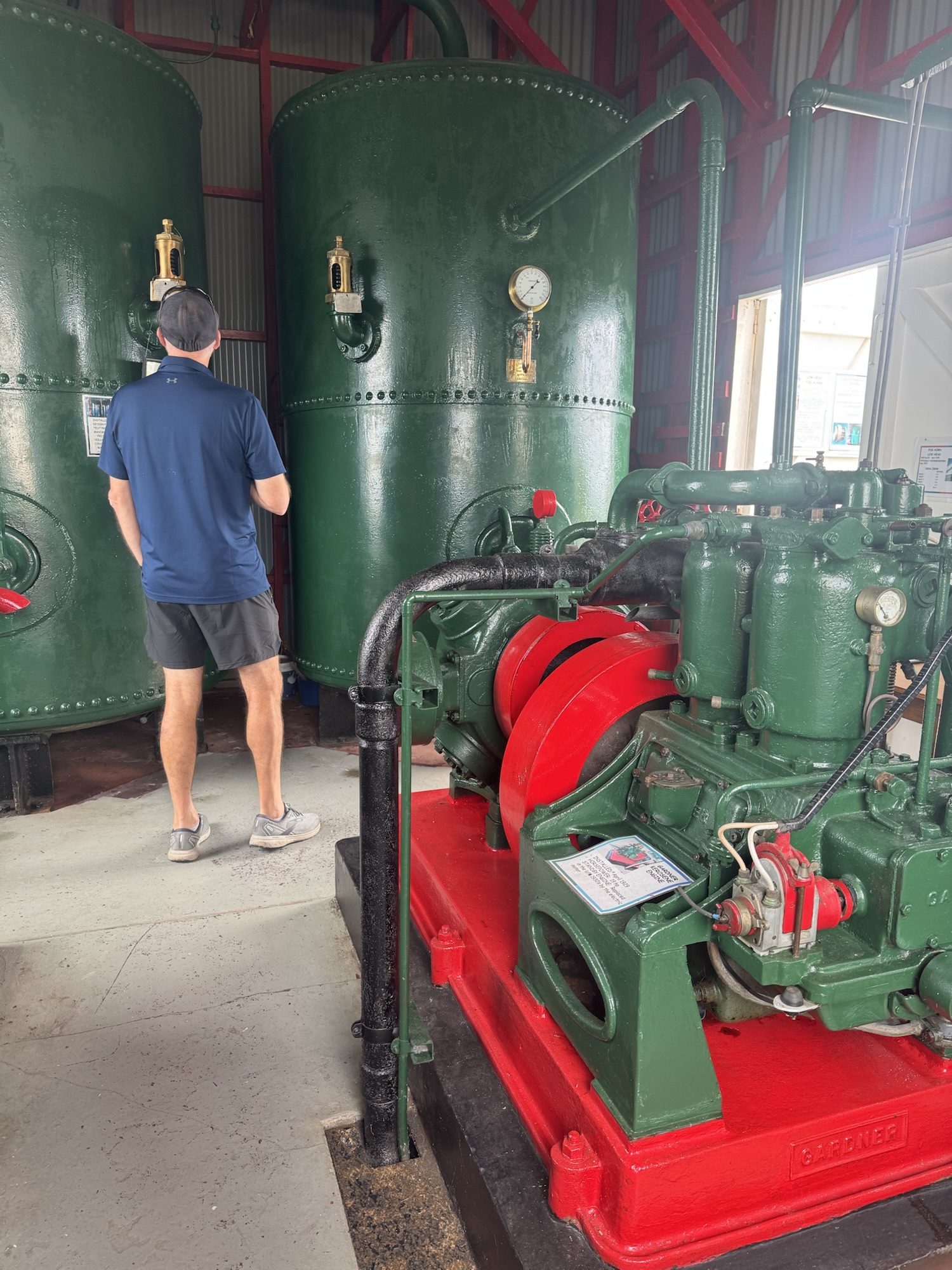
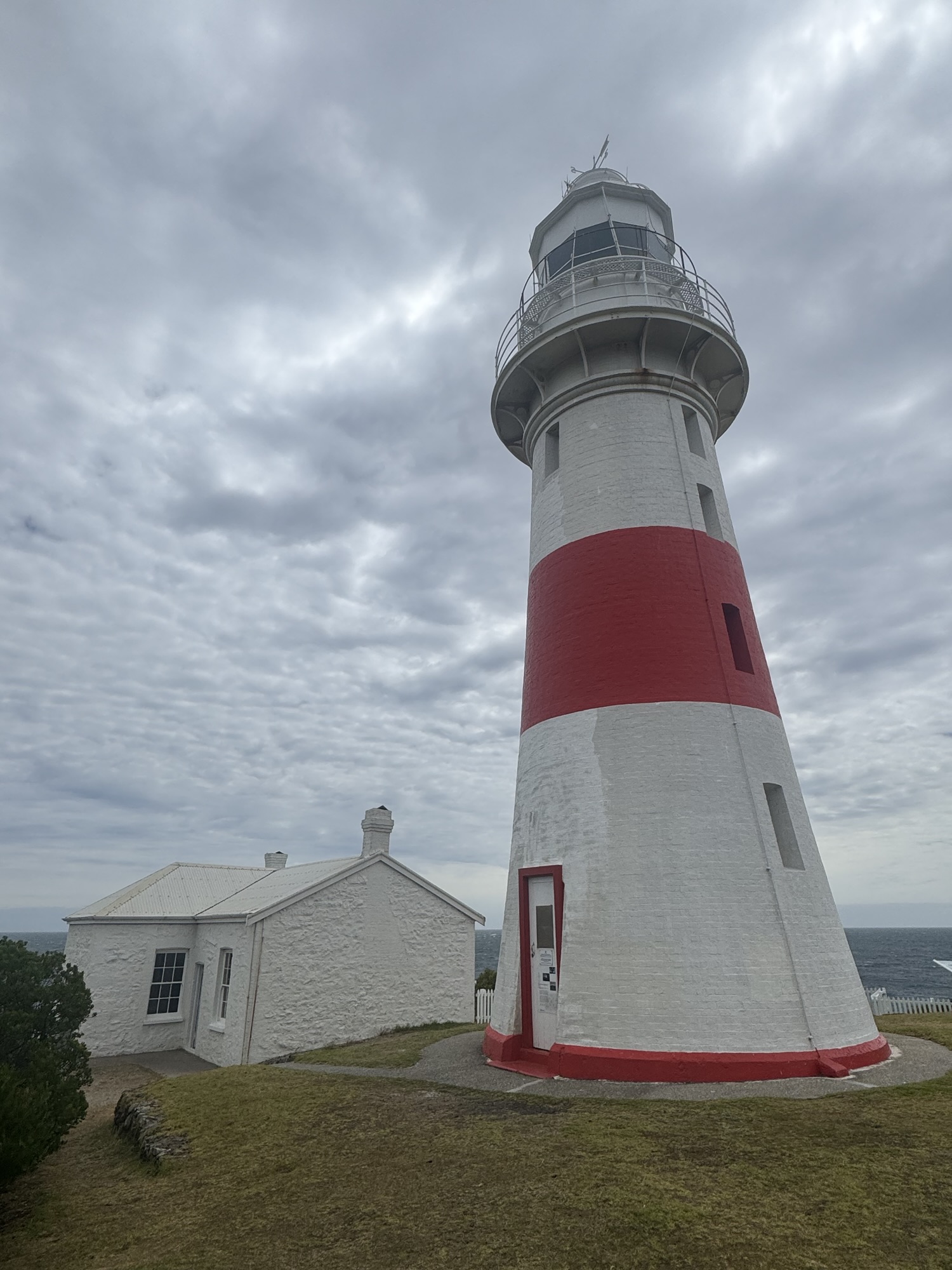
We headed up the hill to the lighthouse, built in 1888 and originally powered by whale oil, before turning electric in the 1940’s. The foghorn here is something to speak of. They blast it at midday every Sunday and it is so big, filling the space within the room that houses it, that when it is sounded, the ground vibrates and the trees move from the force of the sound waves. We headed in to see this engineering marvel and here we were met by an older man, in a black beanie, holding a green leafy twig, who couldn’t wait to tell us all about this incredible machine. Let’s call him Ron.
“It’s the only one left in the world like it, that’s still working, ,” he said, tapping the engine with a swish, swish of his green leafy twig. “It was built in 1929 and starts with petrol, then converts ter kerosene and the air pressure builds up in them pipes there and then it blasts out the front and yer can ‘ear it for thirty-four miles out ter sea. ‘Ave yer been up there?” he asked, pointing outside.
“No,” we replied, although, yes we had already had a look around but didn’t like to interrupt this nice man in his throws of friendliness and enthusiasm. He led us out the door and back up the slope beside the lighthouse.
“‘Ave a look ‘ere,” he gestured to the ground with his green twiggy switch, “see that there lump in the ground?”
I peered at the ground, trying to discern the mound in question from the surrounding lumpy bits in the grass. I could finally see a slightly raised area.
“That there,” Ron informed us, “is where the original Union Jack flew. Then, up ‘ere, there’s another one. See that there lump there?”
Again, I peered at the ground and could indeed see a slight swale surrounding a raised area of grass.
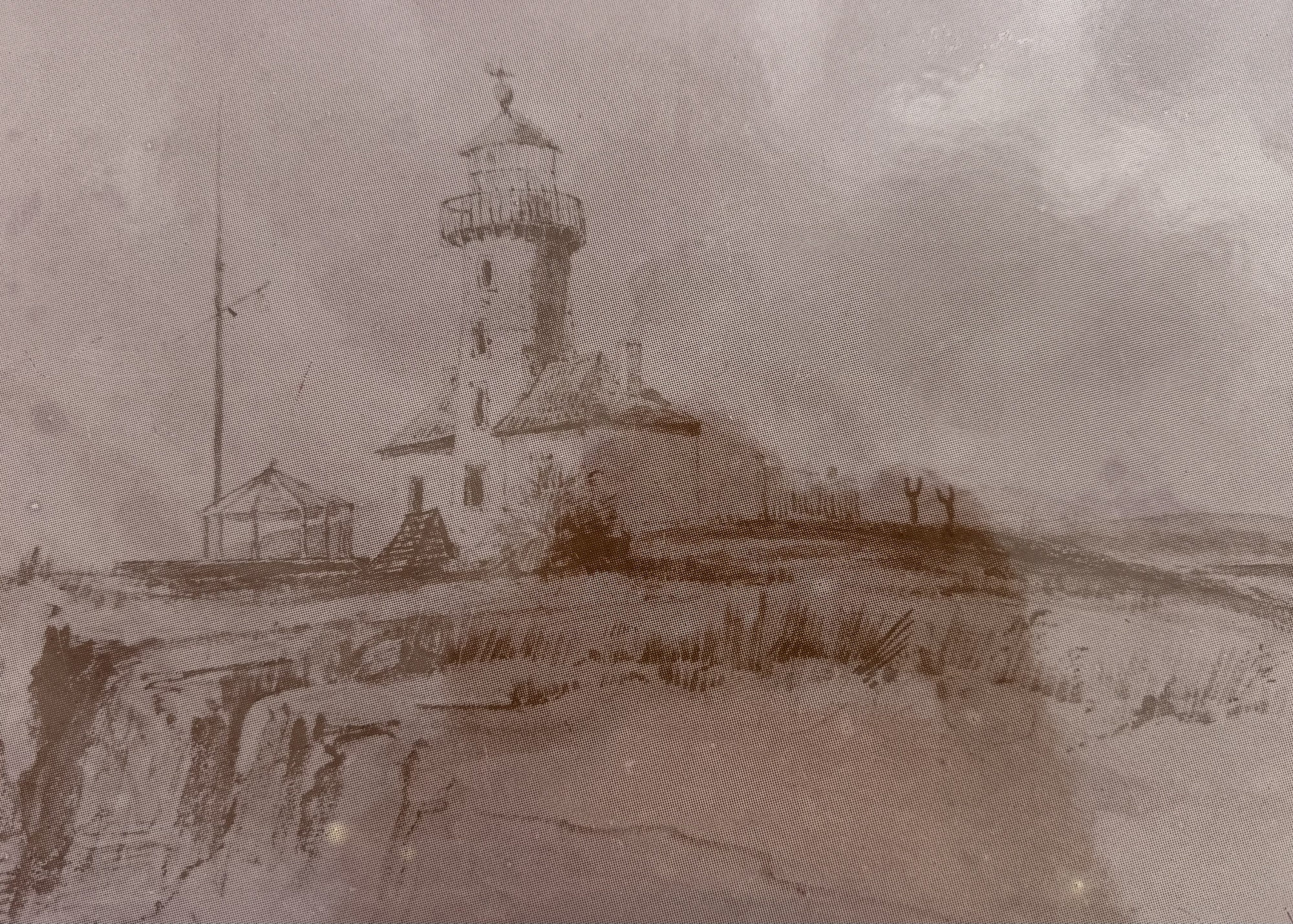
“That’s where the original lighthouse was, built in 1833 and it were too small to live in, so they built them that there cottage down there and they moved in there. Then they built this lighthouse in 1888. The red there on it (swish, swish with the green twiggy branch in the direction of the lighthouse, to accentuate the forthcoming information), that’s called the daylight colour because on a cloudy day, the ships couldn’t see the lighthouse against the sky, but they could see the red.”
We continued strolling around the lighthouse with Ron at our side.
“Thank you very much,” I said, “Thank you for the stories,” because it had indeed been very interesting listening to Ron inform us of some of the history of the place. We began to wander down to the small maritime museum located in the original lighthouse keeper’s cottage. Lo and behold, Ron remained right there at my shoulder.
“There’s some good things in there,” he informed us, as he followed us in and began to give us an ongoing commentary on each and every display. “That’s a giant crab, that there’s a penguin, this is where the kids can put paper over this and use the crayons to make a picture, this is another lighthouse…” and on and on he went. It really was quite endearing.
“Thank you so much, much appreciated,” I said as we left the museum and went around the corner, standing on the small balcony of the cottage to see the view and take some pics. As I framed up the view and began to pan around to take a video, who should come into the frame but…Ron.
“See that there pipe and the bowl at the end down there?” he said, pointing to the ground below the cottage balcony. “That’s where the water runs down and into that bowl for the blue tongued lizard and the wallabies that come ‘round. I’ve seen ‘em. They lap at it like a cat. Not ‘ere today though. Too cold for ‘em…” and the stories continued. I thanked Ron again, had some more chit chat and we began to make our way back down the hill to the car park. “I’ve got to go that way too,” said Ron, as he walked beside us. “See that Queenslander house down there? …” and the stories continued all the way to the car. It really was quite delightful, if a little constant. But, If that’s the sort of friendliness that visitors can expect, then hurrah and thanks I say.
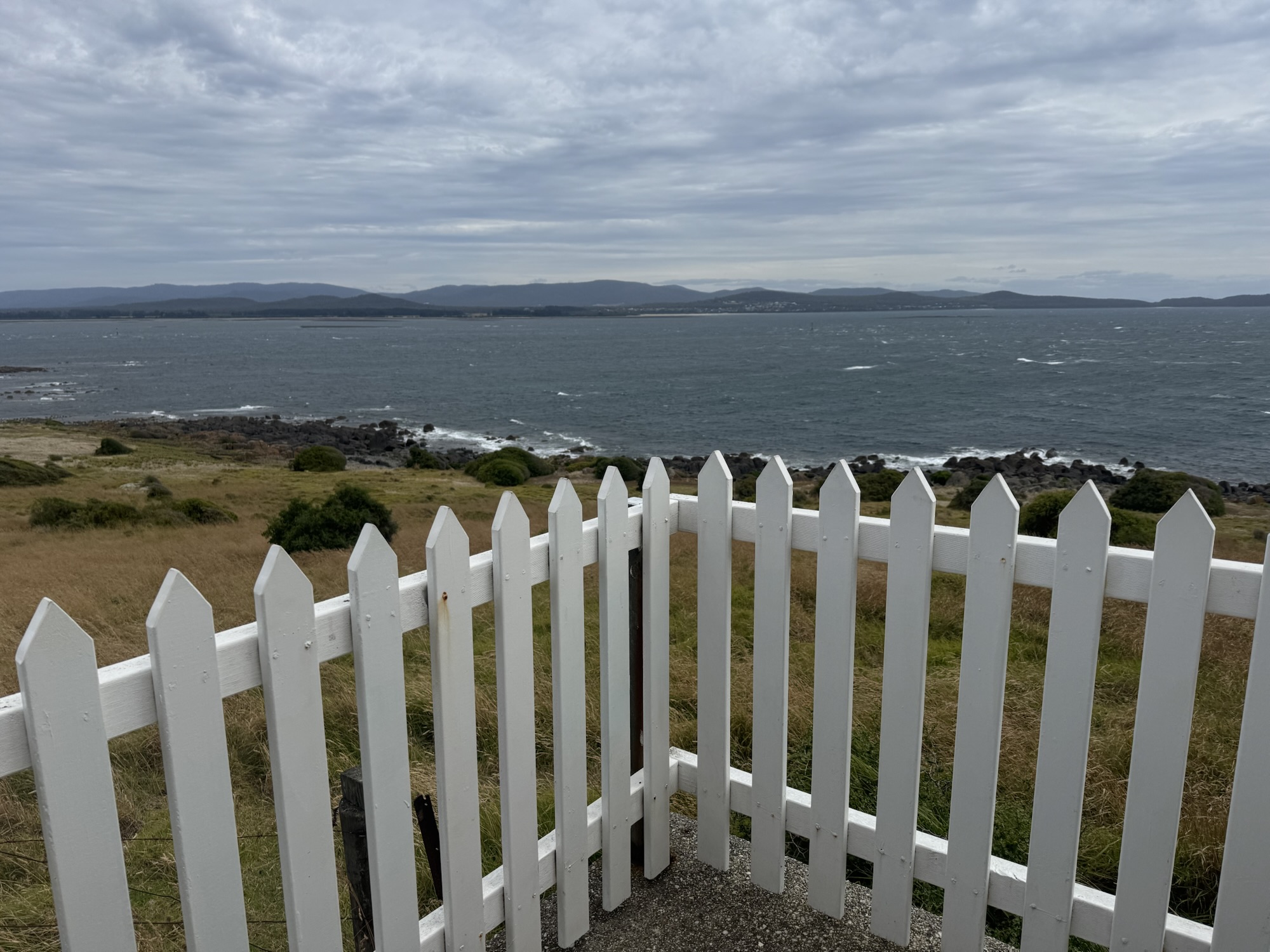
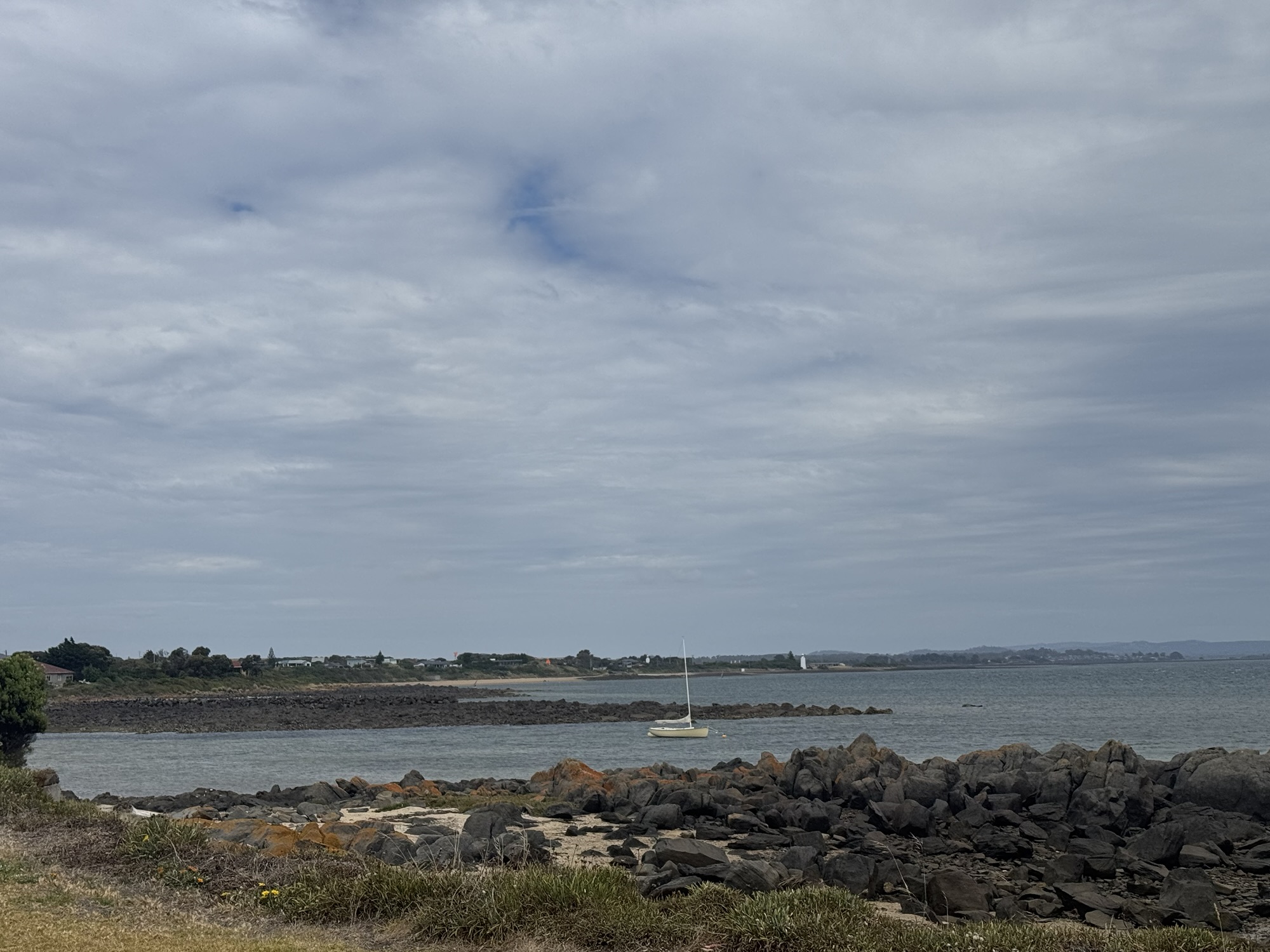
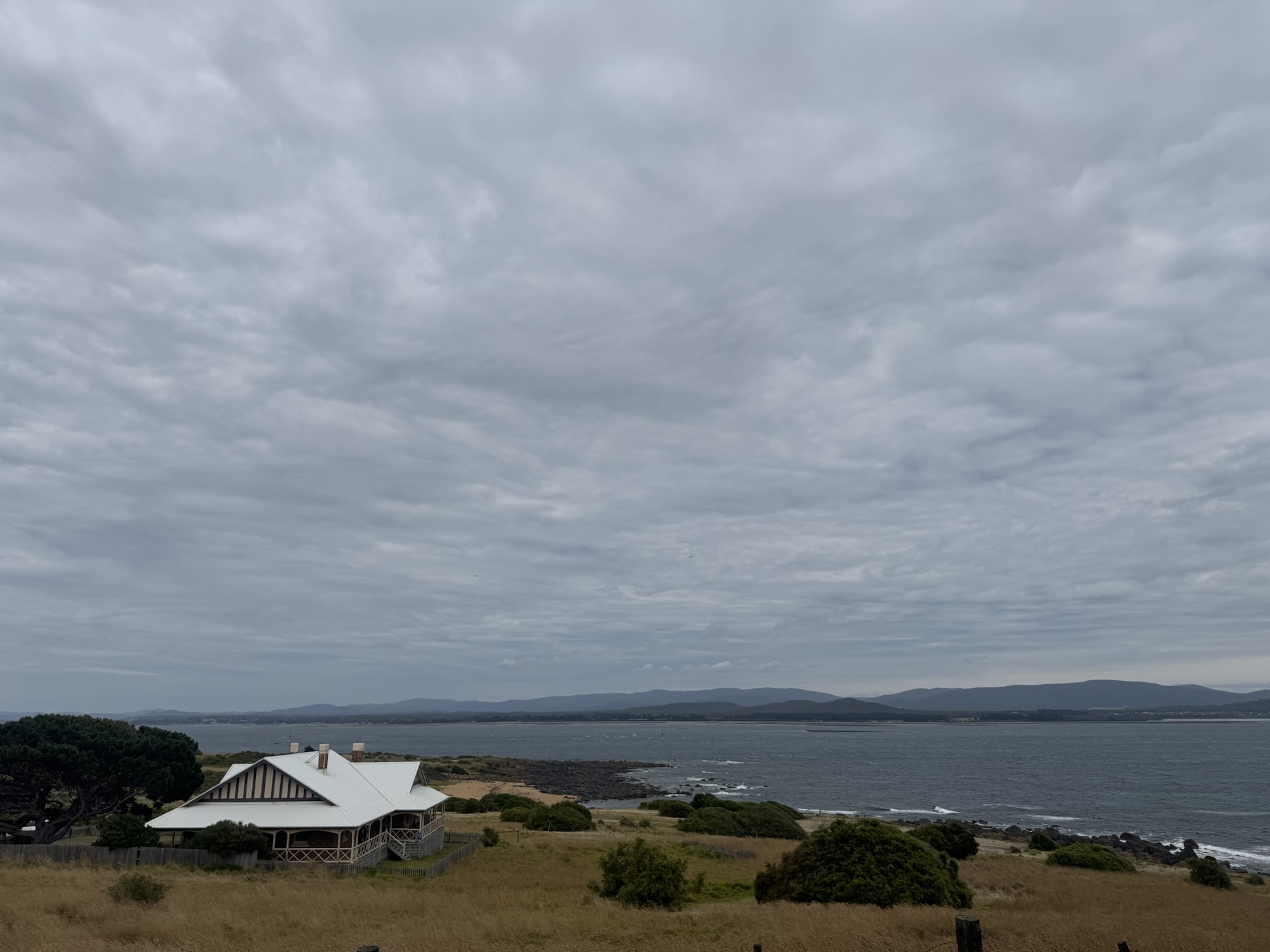
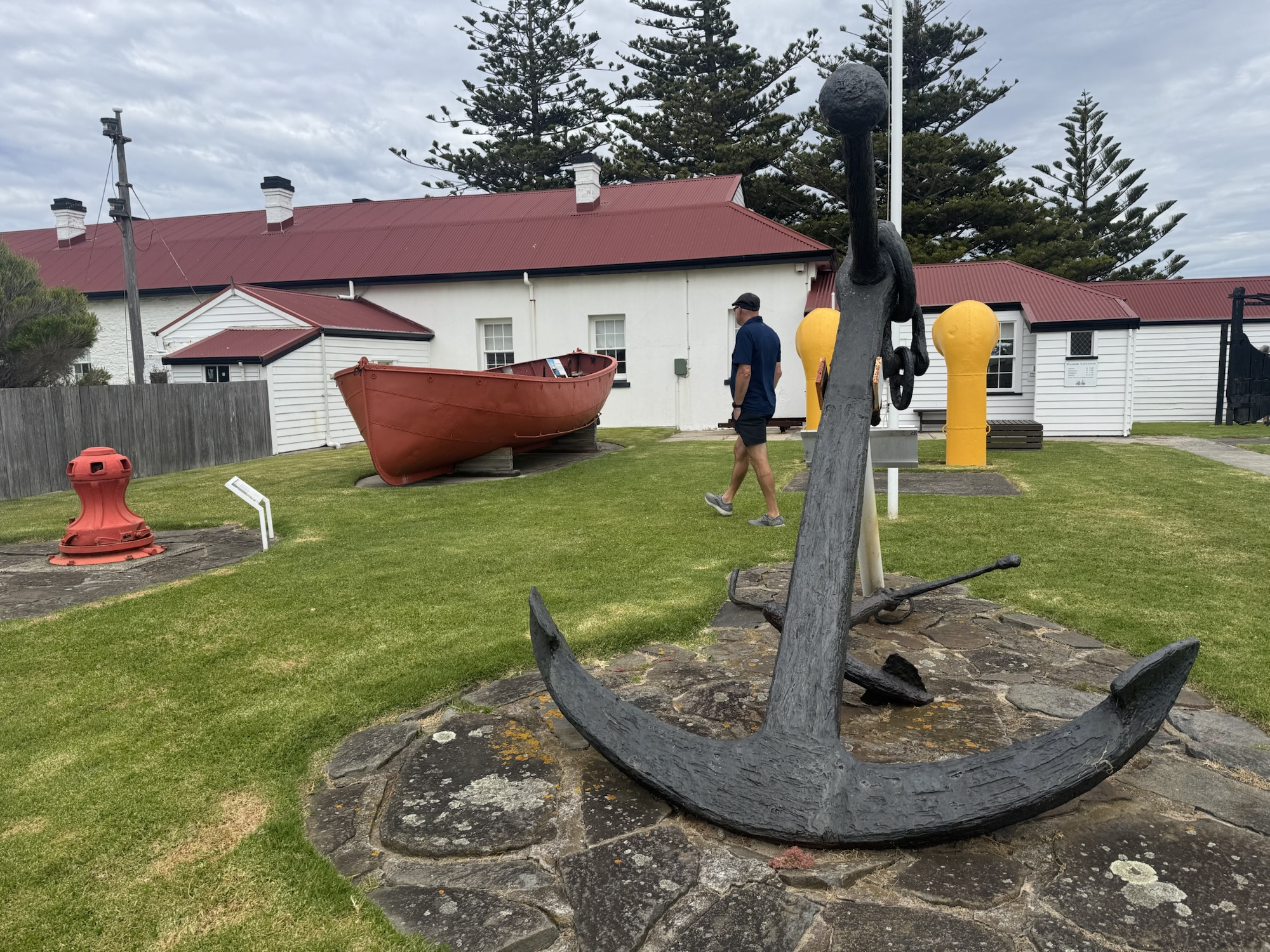
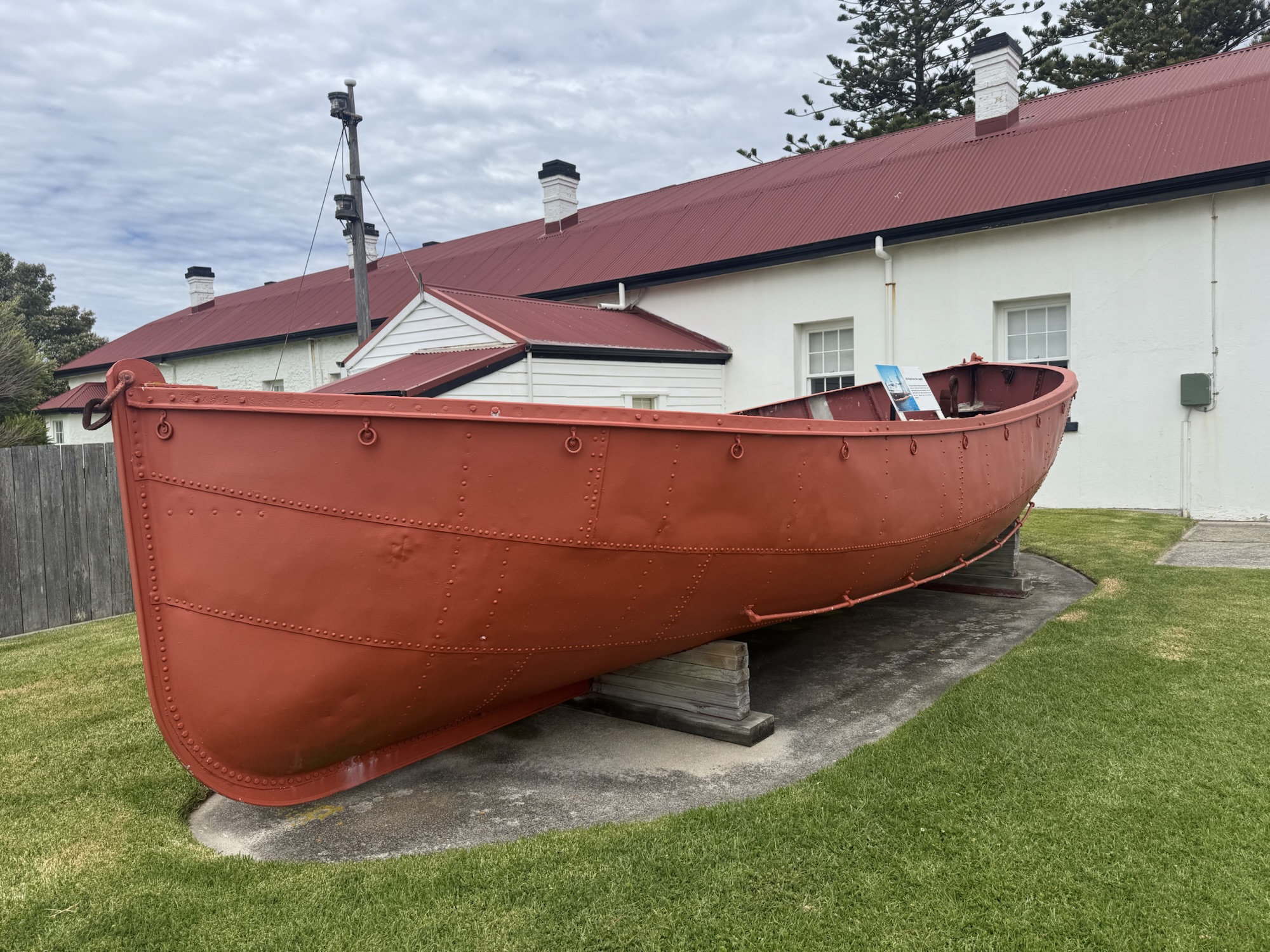
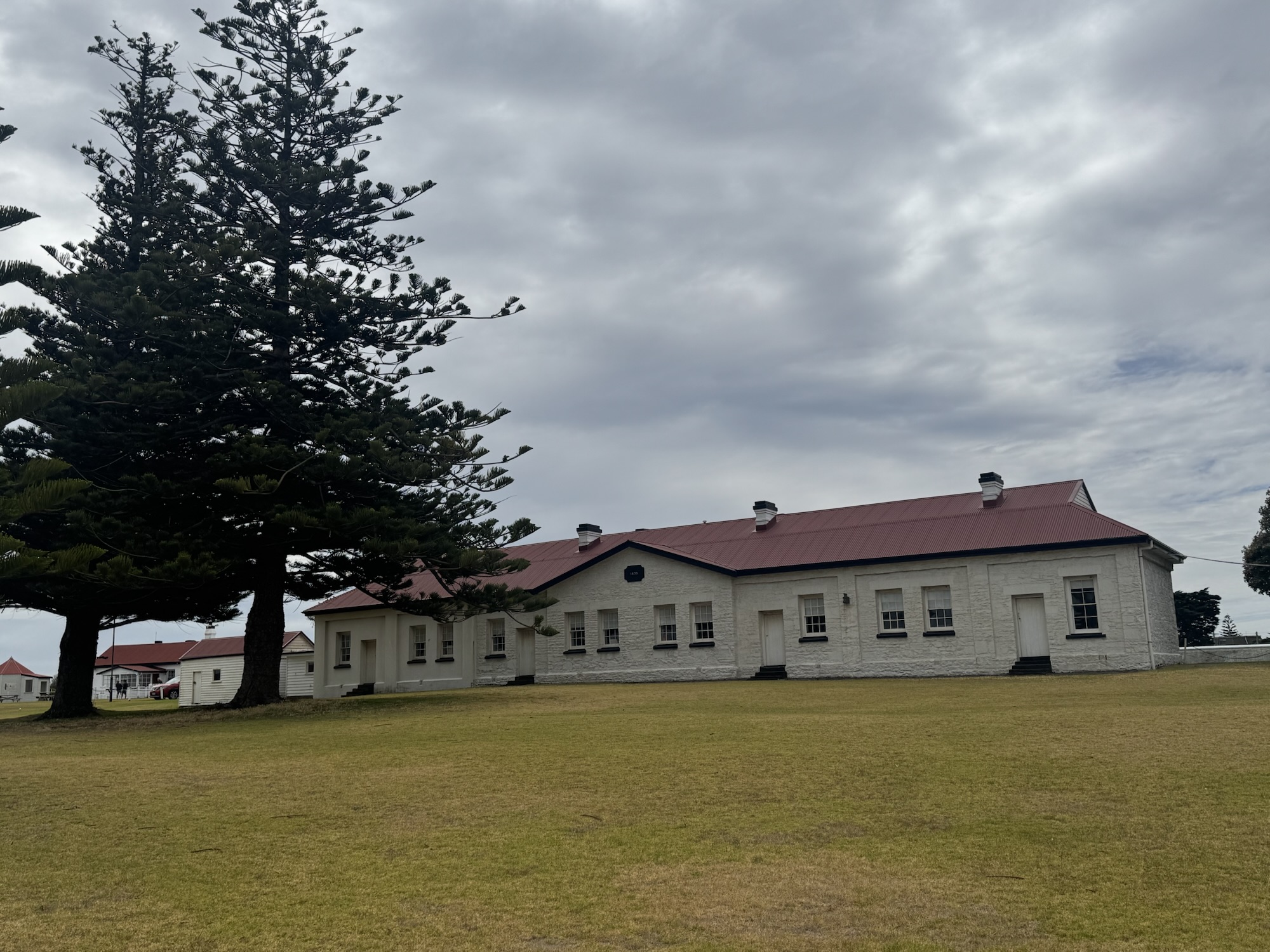
We motored on through Low Head to the Pilot Station, which is now a museum. Not really knowing what a Pilot was in this context, I was pleased to have this question answered, learning that a Pilot was the person who would be rowed out in a small boat, to the ships entering the river, where he would then take the helm of the ship and navigate it up the Tamar River around bends, past reefs, rocks and shallows and through the fierce eddies of Whirlpool Rock. The task could take anywhere from 4 1/2 hours to three days.
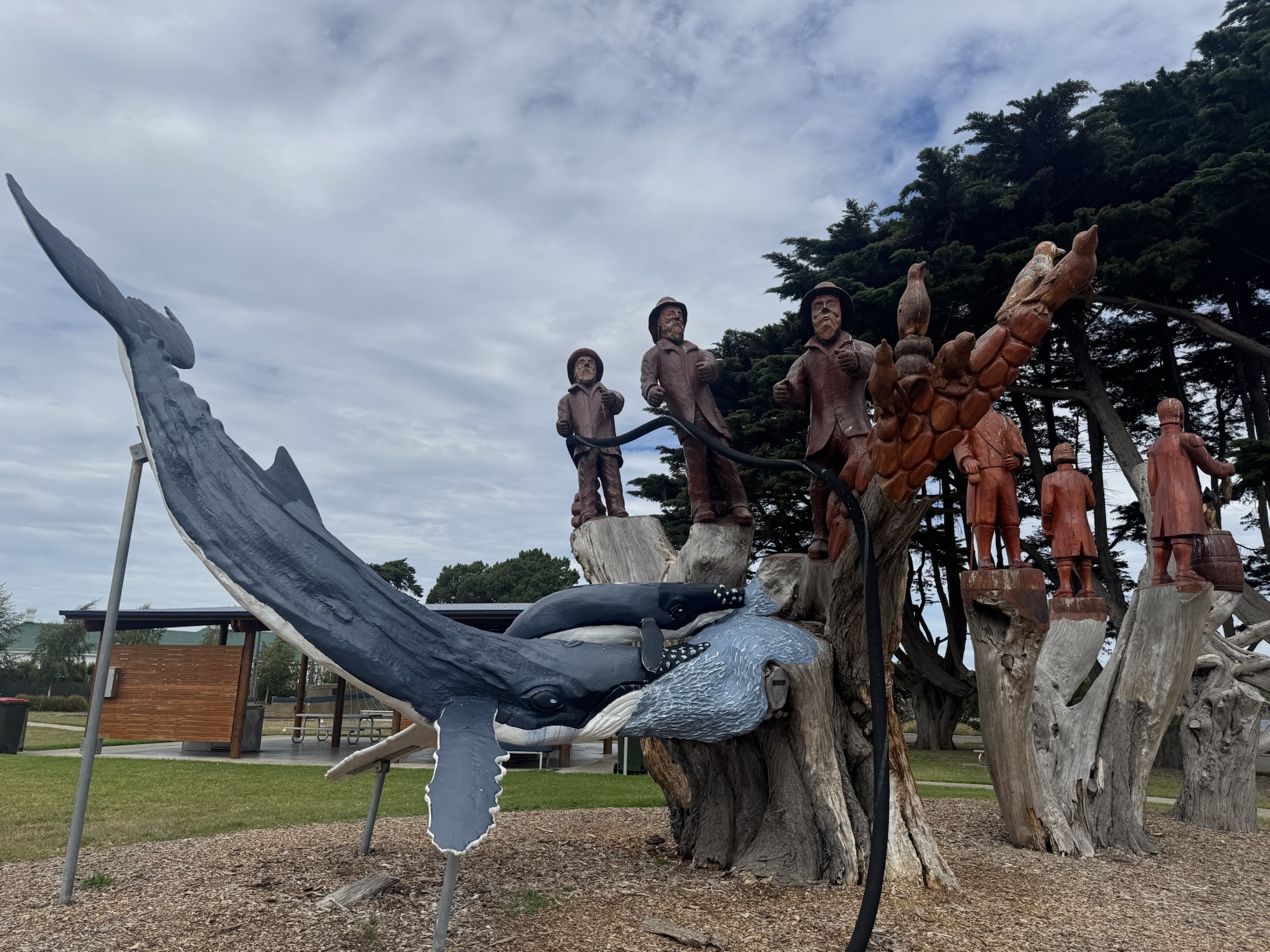
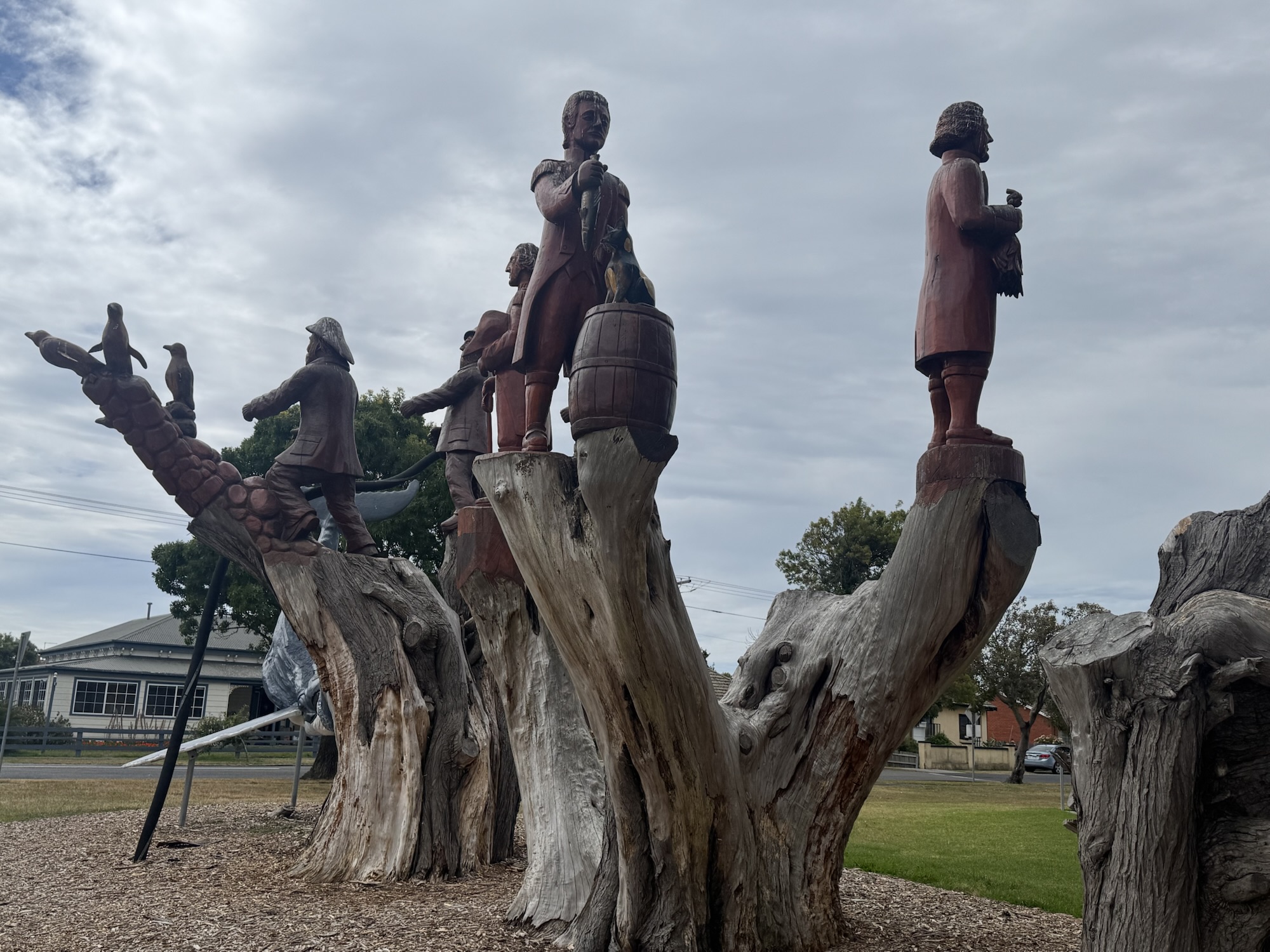
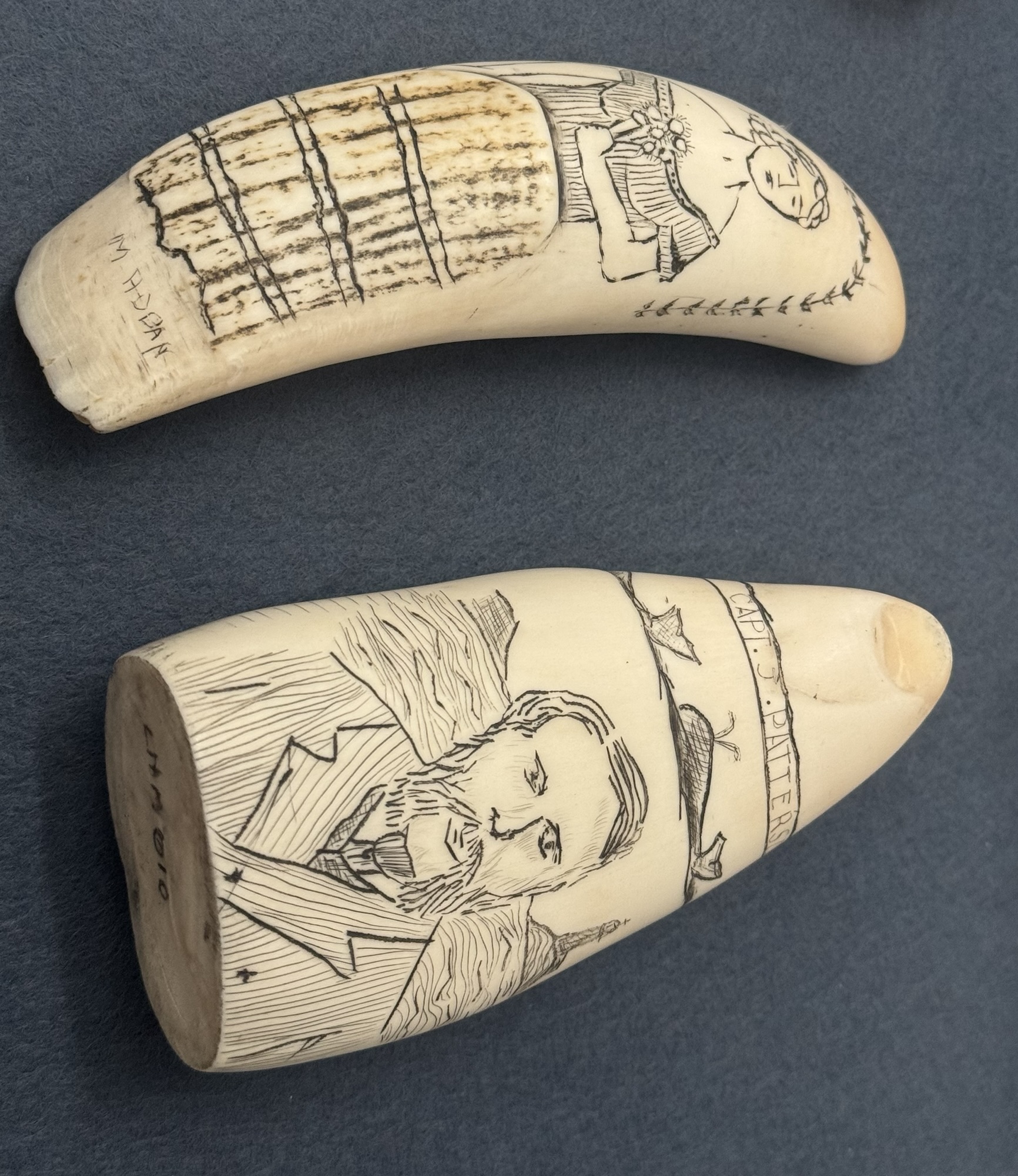
The museum was on the original Pilot Station site and showed stories and artefacts of some of the maritime history of the area. Here again, we were greeted by a trio of volunteers, three older men sitting on chairs near the rudimentary desk at the entrance, clearly enjoying each other’s company and greeting visitors. We paid our small entry fee and took ourselves for a walk through the various rooms. As we walked away I heard the man at the desk say, “It’s stuck again Des, the paper won’t come out,” as he picked up the recalcitrant eftpos machine and held it aloft for his tech savvy octogenarian friend. Des raised himself from his chair and set off towards the desk to wrangle with the misbehaving piece of electronic modernity. “See here, it just gets stuck and won’t come out.” We left them to it.
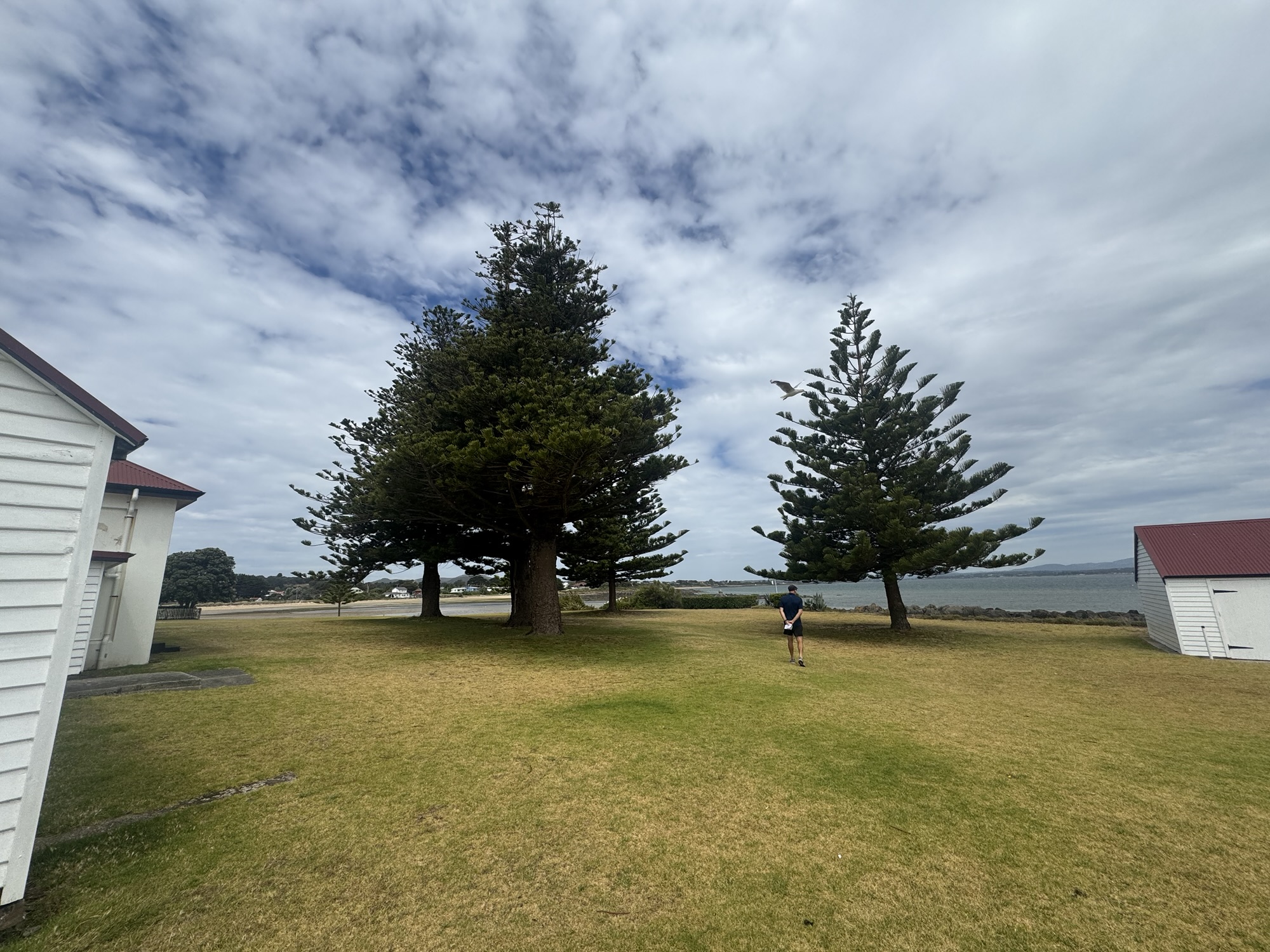
With no accommodation available in the area, given our short notice decision to venture here on a long weekend, we set off half an hour out of town to Beaconsfield, a town with its own interesting stories and history. This would be our pit stop for the night, before exploring another small, time-warp town on our small island. It had been an interesting day, where we were again reminded that travel, whether to far flung places, or close to home, is all about the people. It’s the stories and it’s the people we meet along the way that helps create a memorable experience. Today that was fulfilled by Ron and his fog horn and Des and his mates at the Pilot Station and the challenge of an eftpos machine. Sometimes you don’t have to go far at all to feel like you’ve travelled, and sometimes, to have travelled back in time. We just need to have a look around and see what we can discover. ‘Ave a look up there…’ave you ‘ad a look? Just ‘ave a look at that…!


Leave a comment